
AI Design
Beta testing
Product strategy
Helping venues find the right event opportunities faster
Redesigning a workflow so response times shrink from days to minutes.
Role
Design lead, Researcher
Team
Researcher, Content designer, Architect, VP of Product
Timeline
Mar - Apr 2022 (3 months)
Tasks
Pitching, Prototyping, Interaction design, Research
Tools
Figma, Sigma, Microsoft Azure
For each event opportunity, 10 hotels race to complete a form that hasn’t been updated in 25 years fastest. In a 3 month sprint before our sales conference, I partnered with SMEs to secure board buy in. We launched an AI assistant that auto-assigns meeting rooms and drafts responses. Beta feedback is being used to iterate before GA.
398/800
Target venue adoption
Beta live
Launch on schedule
Q4 Rollout
Targeting GA in Q4 2026
Context
Hoteliers (salespeople that work at hotels) have been raising the alarm for years. It’s an open secret that event and hospitality often ranks as one of the most stressful employment sectors.

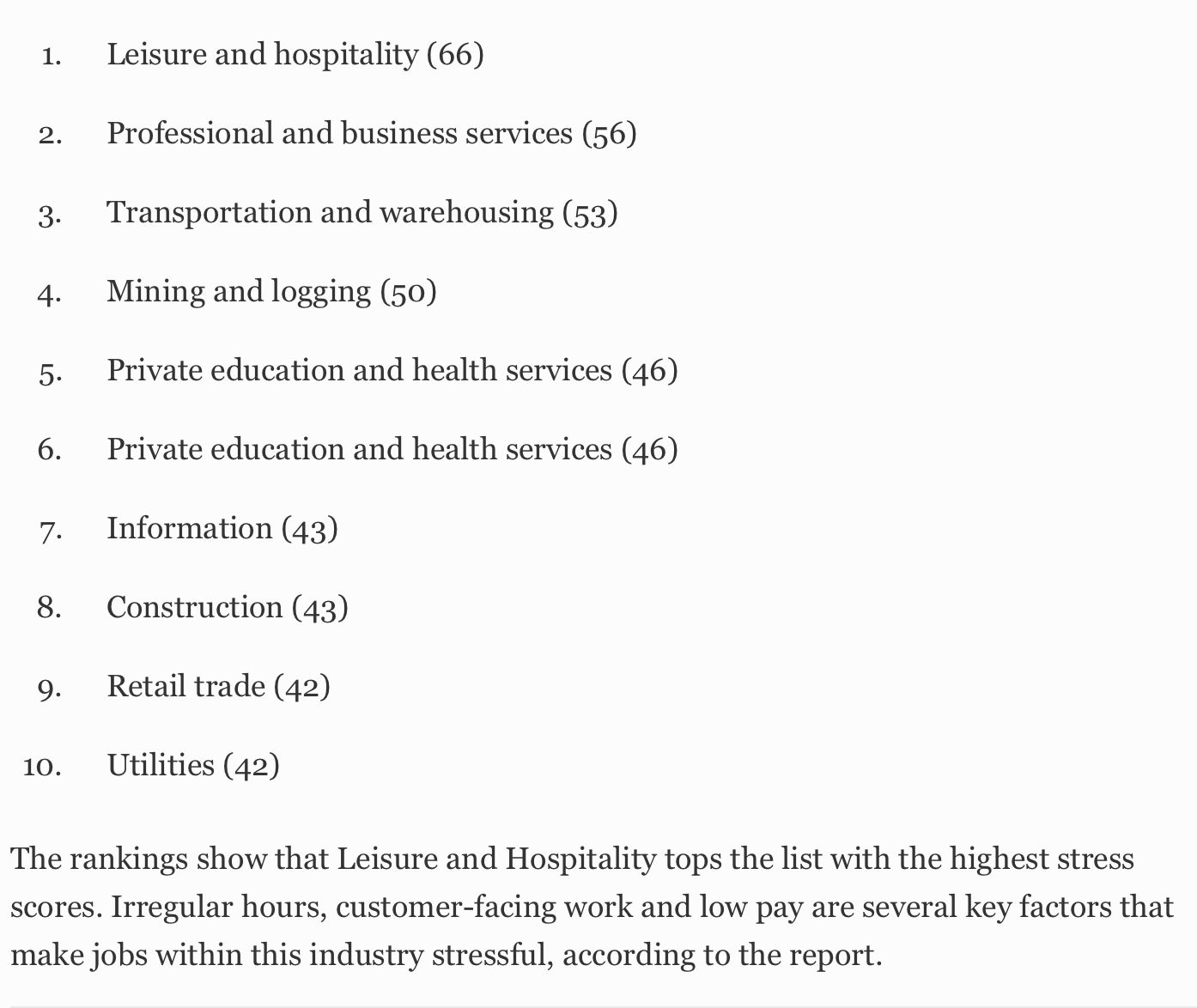

It’s not clickbait, working in the event industry is hard! Article from Forbes.
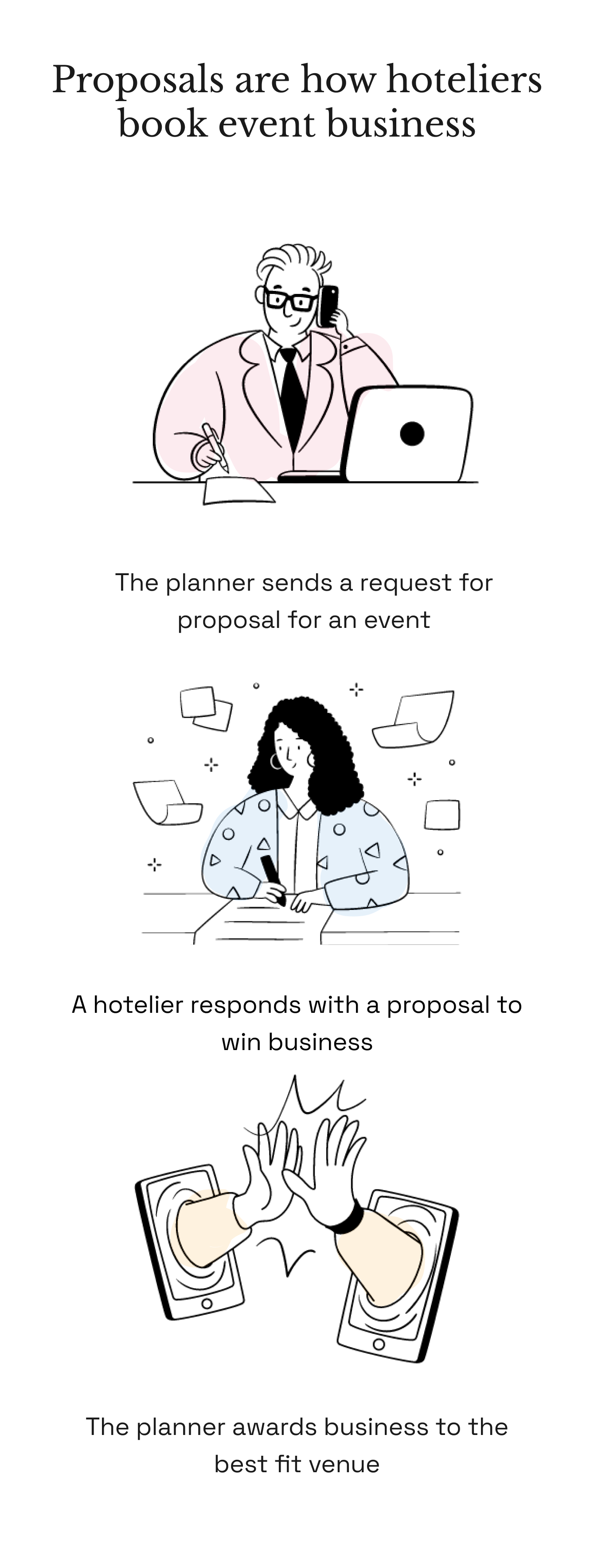
A high level summary of the sourcing workflow
The current experience
Imagine working on this for half a week, multiplied by the amount of leads you're trying to win 😅
3.5 Days
Average completion time
10:1
Venues competing per event
25 years 😱
Since last workflow update
This project arrived at the start of the AI boom. Executive leadership wanted two high-value beta ready AI experiences to debut at our annual sales conference.
The stakes were real. Our proposals are the industry standard but they’re cumbersome and legacy. We were in a prime spot to be disrupted by a fast moving AI first startup, and in many ways still are.

“How might we have... improved this UI?”
Please note this project involved heavy constraints and legacy systems. For more exploratory projects, check out the Bridge project.
The Problem
How might we automate cumbersome manual processes so users with limited time can complete proposals faster?
*Without restructuring the current workflow
A full redesign was out of scope, so the solution needed to work with the legacy experience while scaling for the future.
Research
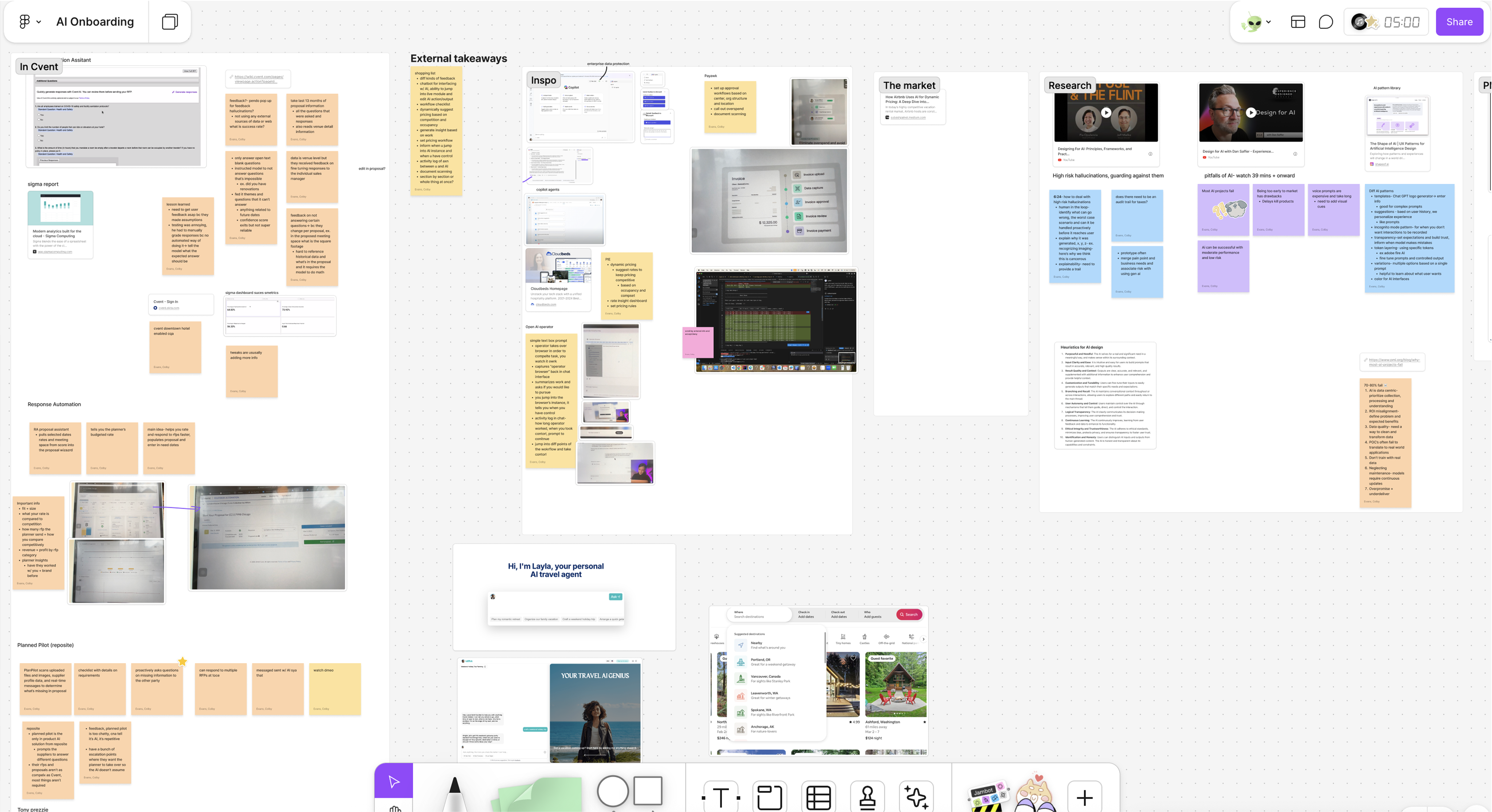
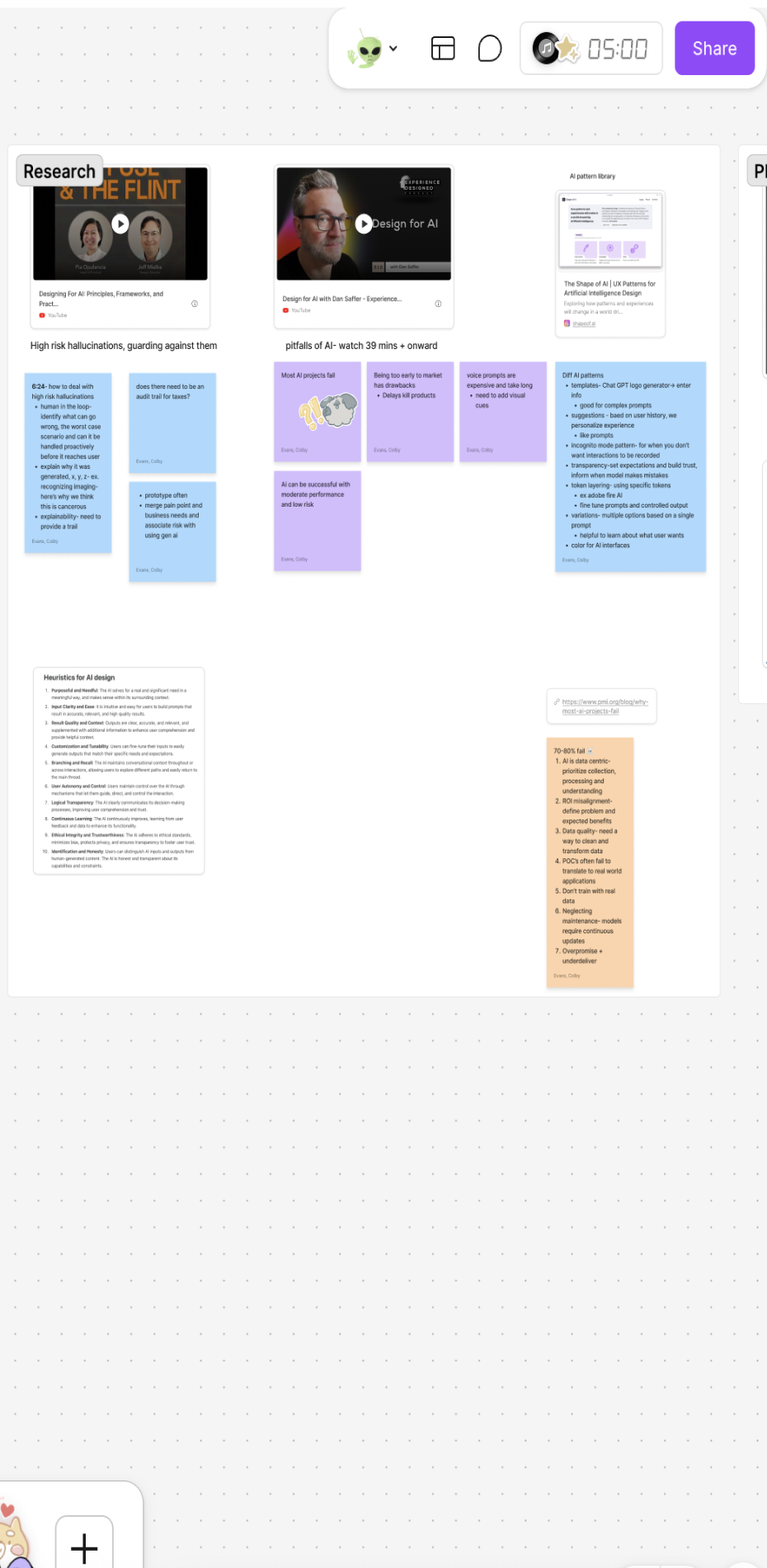
Before the project kicked off, I scheduled time with burgeoning AI SMEs, read articles and audited tools like Claude, ChatGPT, and Notion to identify emerging interaction patterns.
Takeaway 1
AI is the tool not the feature
It’s a technology that’s fallible, not a magic money printer. In fact, chat UX often pushes the cognitive load of precise description onto the user through prompt generation.
Takeaway 2
Task time management
Assigning rooms, answering questions, and providing pricing are the most time-intensive tasks.
Takeaway 3
Premature room assignment
Users resist assigning rooms because proposals are sent months before an event, and rooms are likely to change.
Takeaway 4
The no-feedback loop
Hoteliers spend days creating proposals, but planners only award 1 in every 10 offers. Some hoteliers reduce quality to save time.
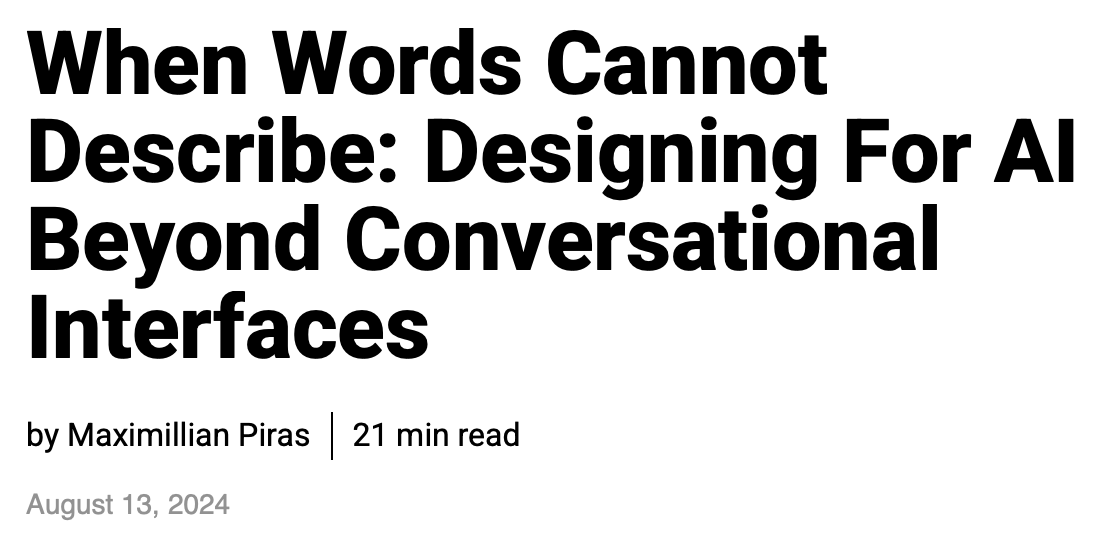
For more reading on this I recommend When Words Cannot Describe by Maximillian Prias
With three potential sections to focus on (meeting rooms, adding pricing, answering questions), and the above research findings, I collabed with PMs to target automating room assignment would be the most attractive and feasible value add
Key Decisions
This was a tiger team effort. Engineers explored what was technically possible with LLMs while I ran parallel UX exploration. We learned what was possible from each other in real time. It blurred the lines of traditional iteration cycles.
01
Exploration
User flows, sketches and competitive audits. Daily syncs with leadership.
Collaborators: Architects, Engs, PMs, PDs
02
Iteration
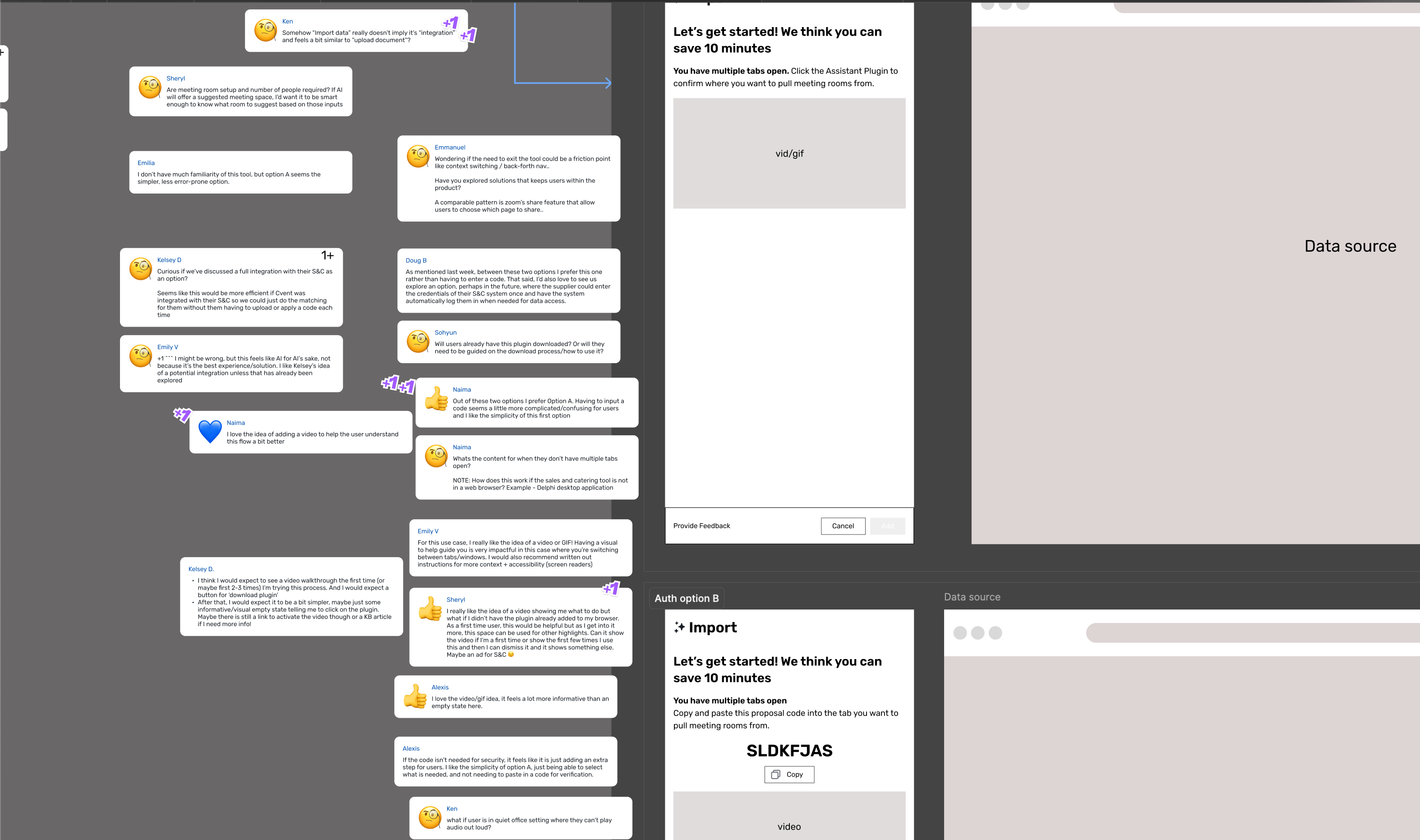
Workshops and crits to pressure test designs. Constant negotiation between what was ideal, and what was possible.
Collaborators: Devs, PDs, CDs, UX management
03
Polish
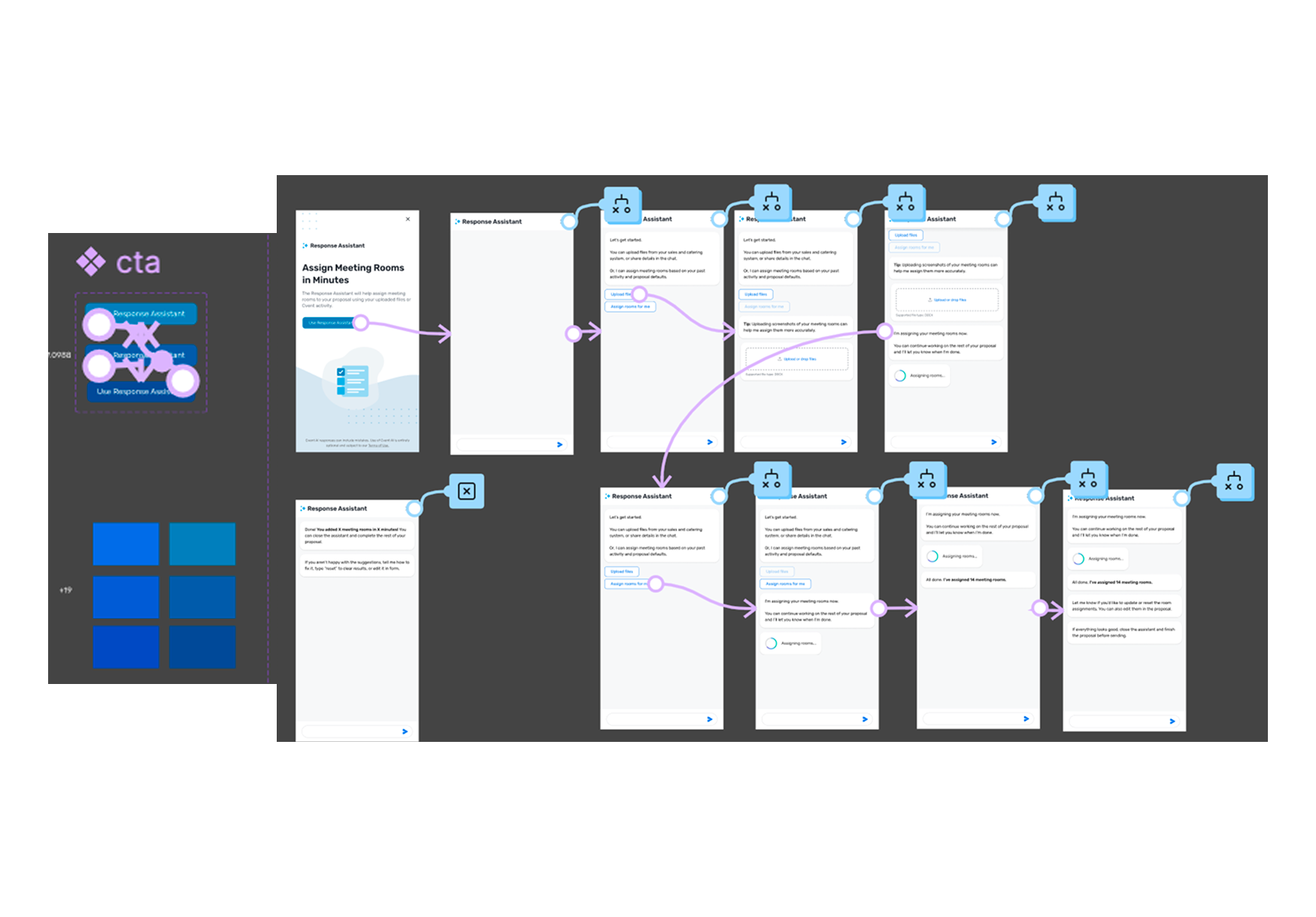
Refinement, prototyping, executive check-ins, and board pitches.
Collaborators: PMs, Sales, Exec leadership
04
Repeat it all next week (or sooner)
Agile environments demand fast loops and even faster feedback.
Collaborators: all of the above!
Process
Enhance!
These artifacts have more breathing room at a larger breakpoint!
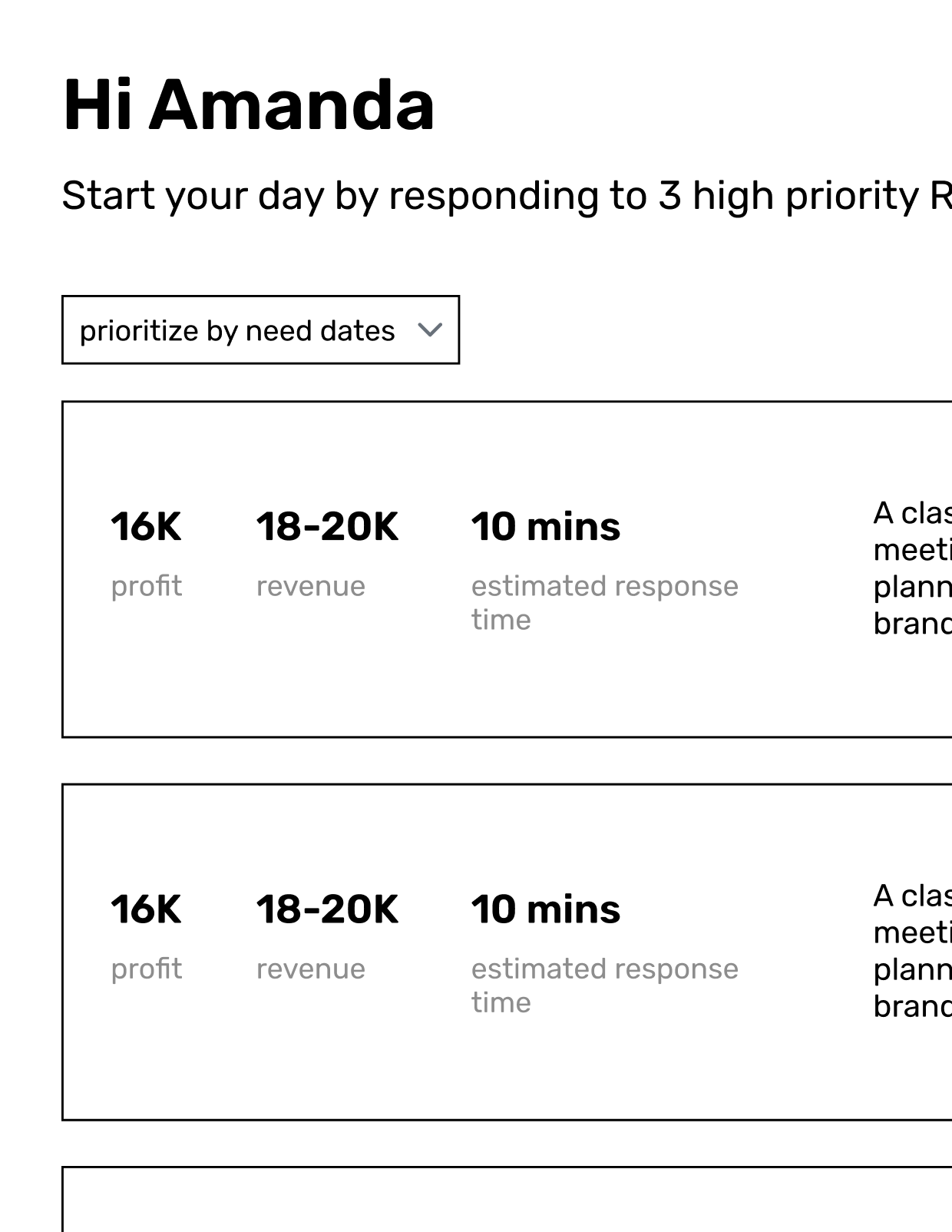
Panel as main interaction model
1 / 3
AI native chat
✅ Pros
- Matches emerging chat interface patterns
- AI native experience circumvents legacy technology
- Canvas flexibility allows to leverage the design system
❌ Cons
- Disconnected from proposal experience, might be jarring
- Adding scope with the ability to review and pull data from multiple products
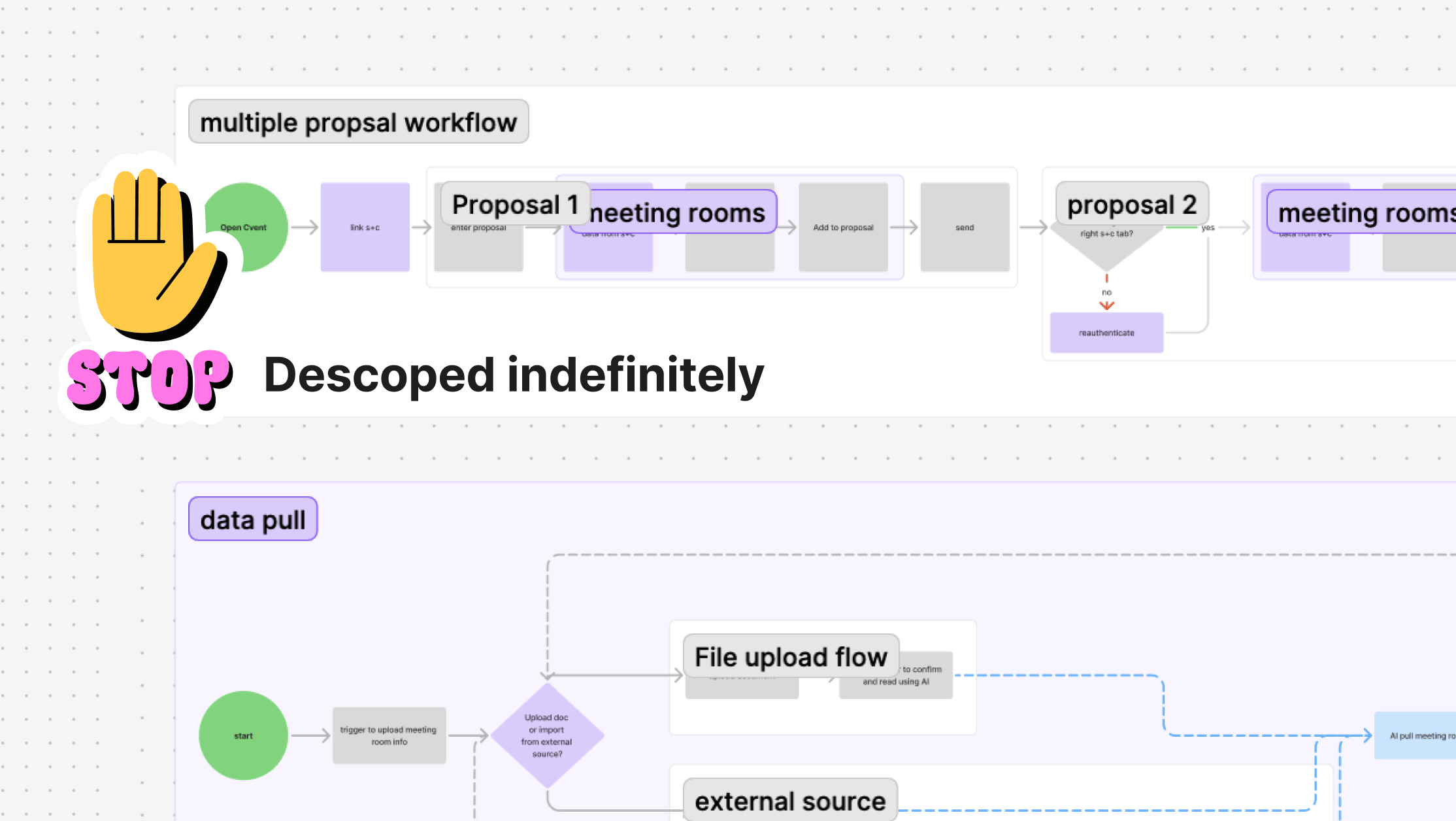
Single proposal workflow
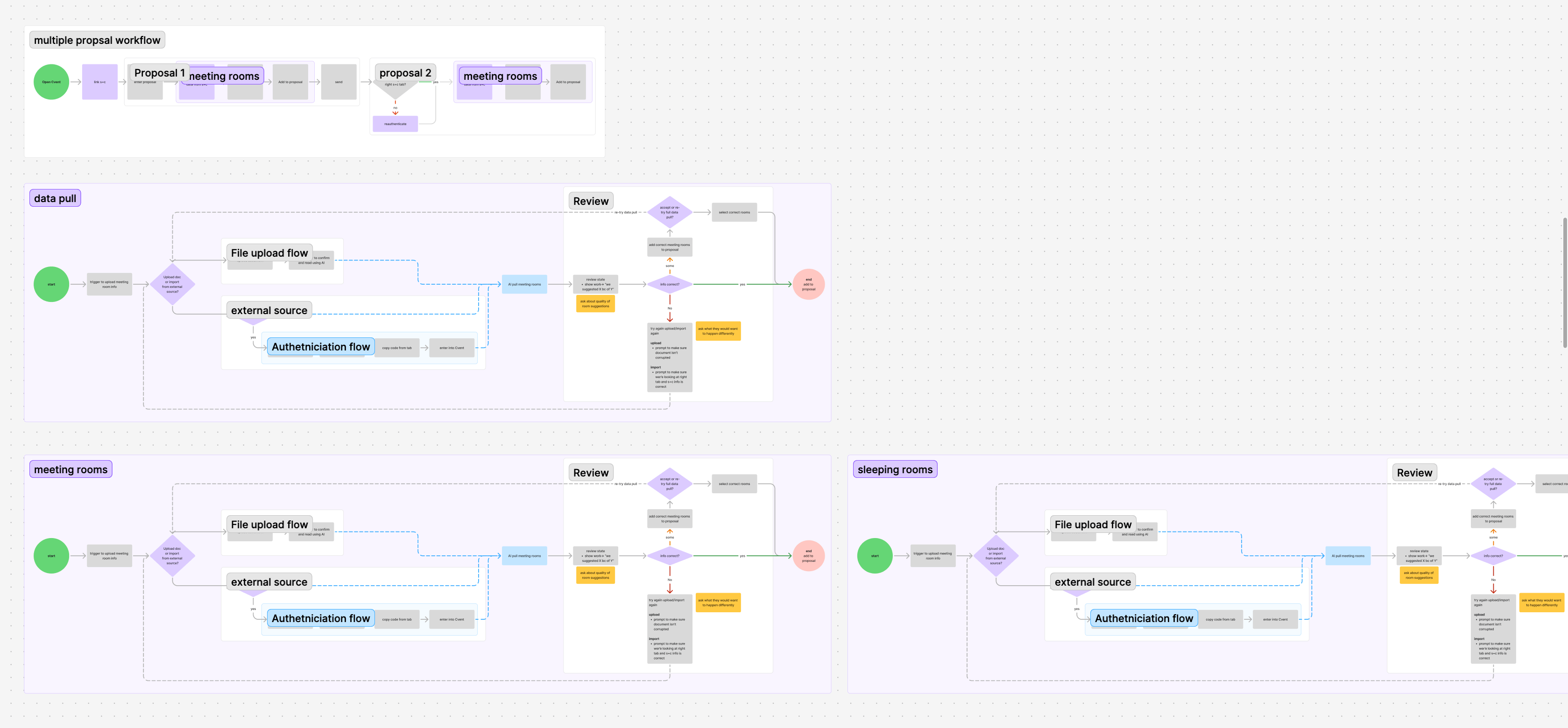
Designing for multiple proposals simultaneously would have had a higher payoff, but required exploration well outside our timeline. With three months on the clock, I made the call to nail the basics and focus on a single proposal.
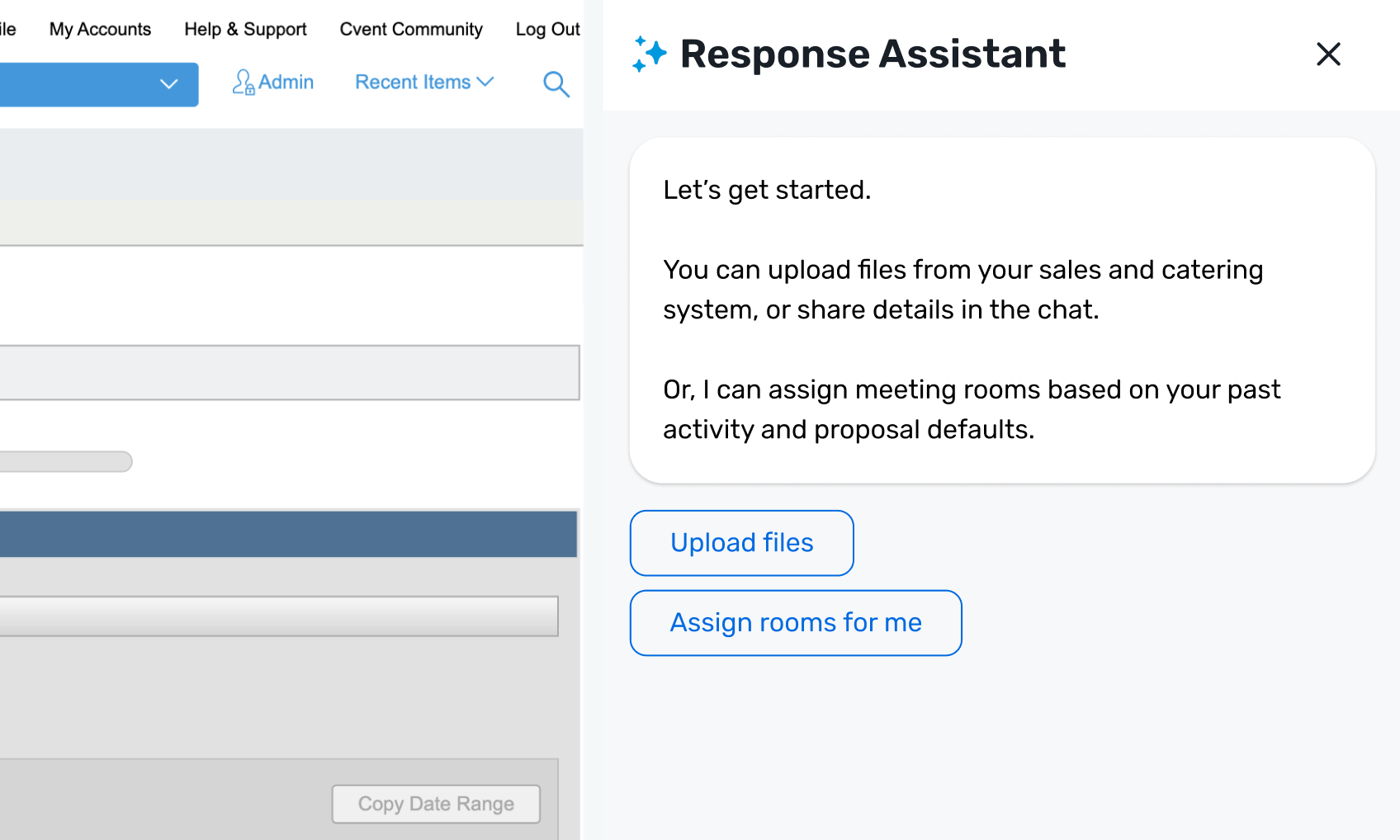
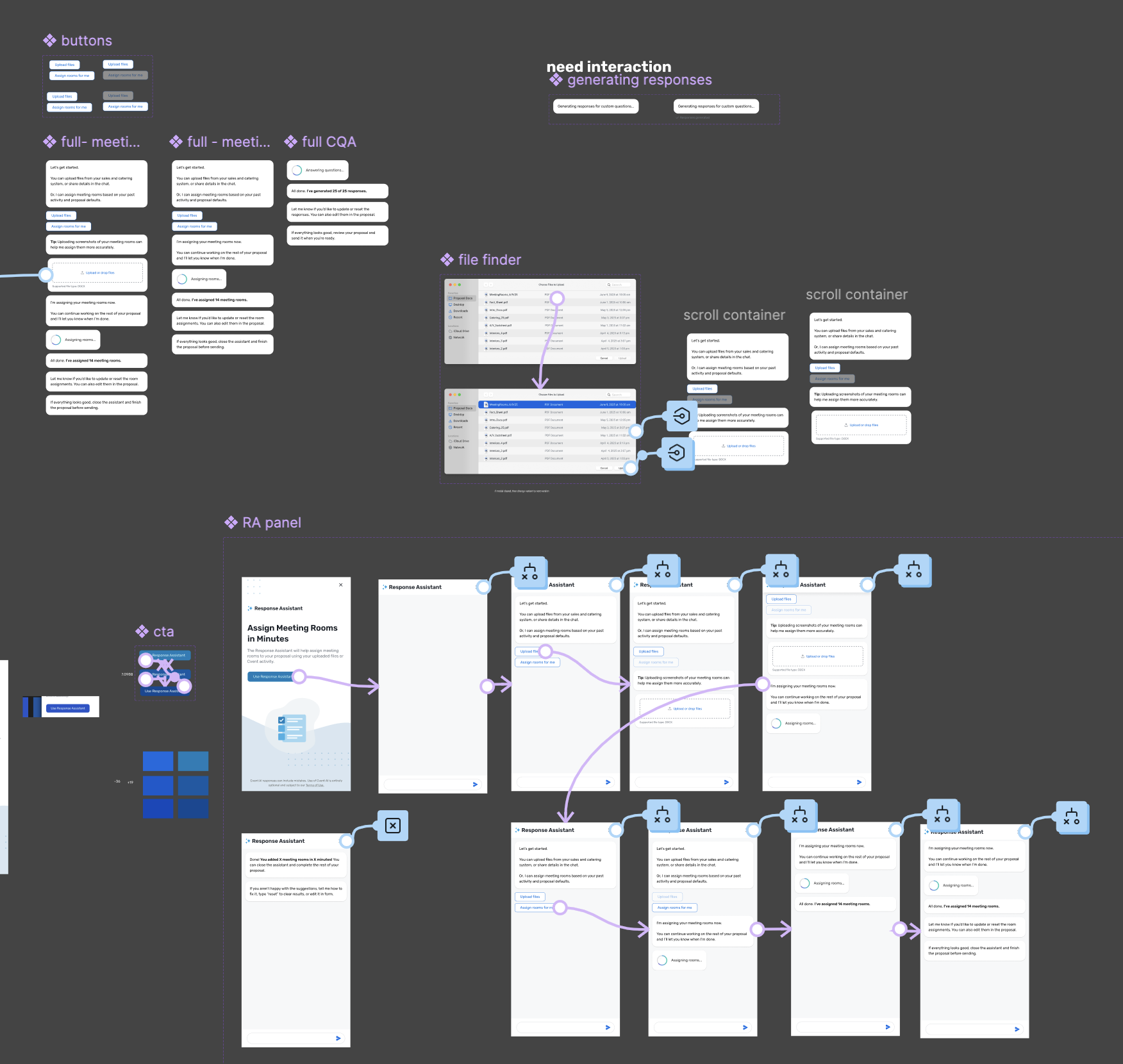
Upload and auto assign
Users could push information from a CRM, upload files, or have the system auto-assign and auto-draft. I focused on file upload and auto-assign as the lowest lift and easiest to comprehend.
Zoom in: designing for safety
The assistant filled out the form so fast, opening and closing modals could trigger seizures.
Final designs
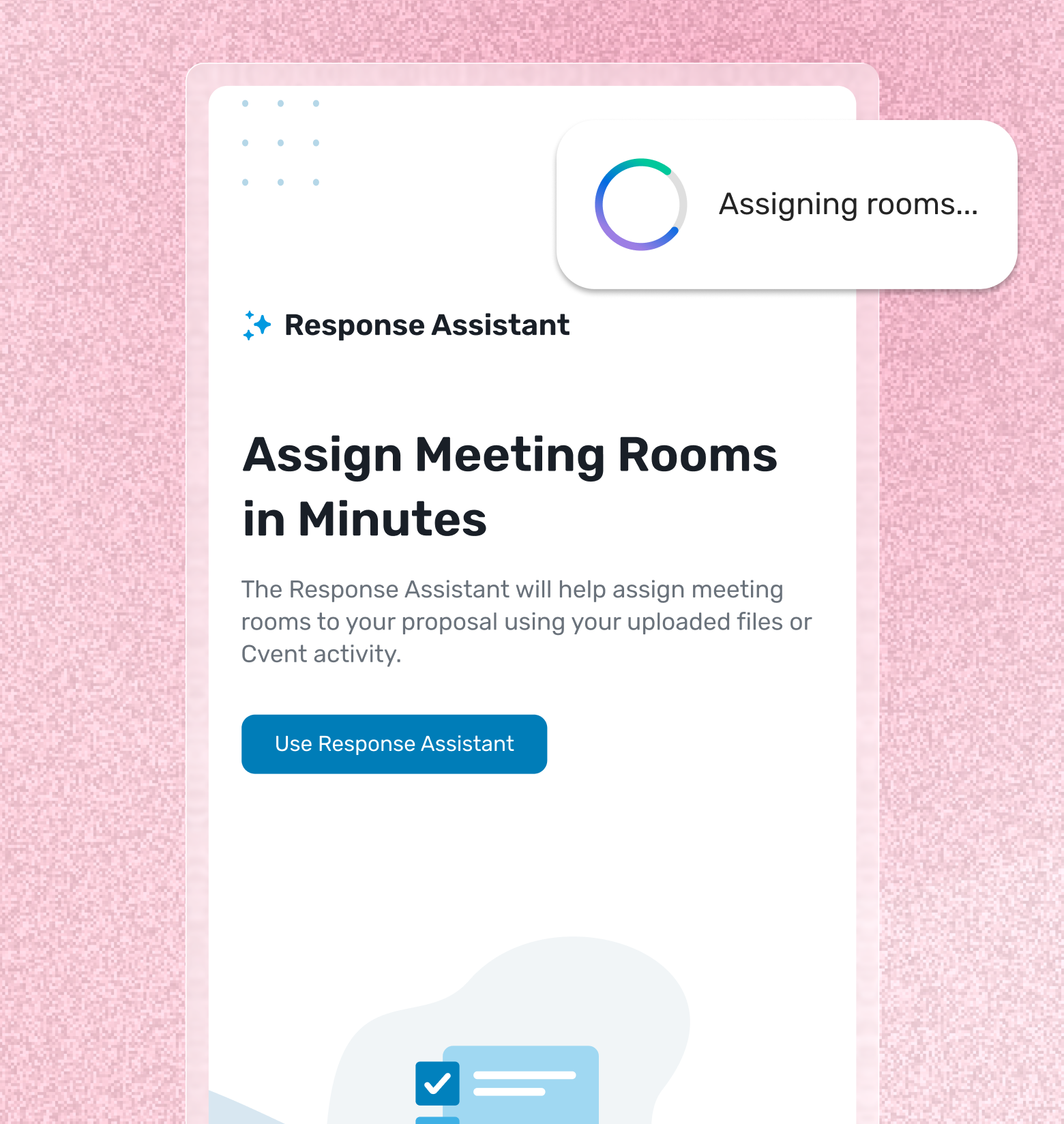
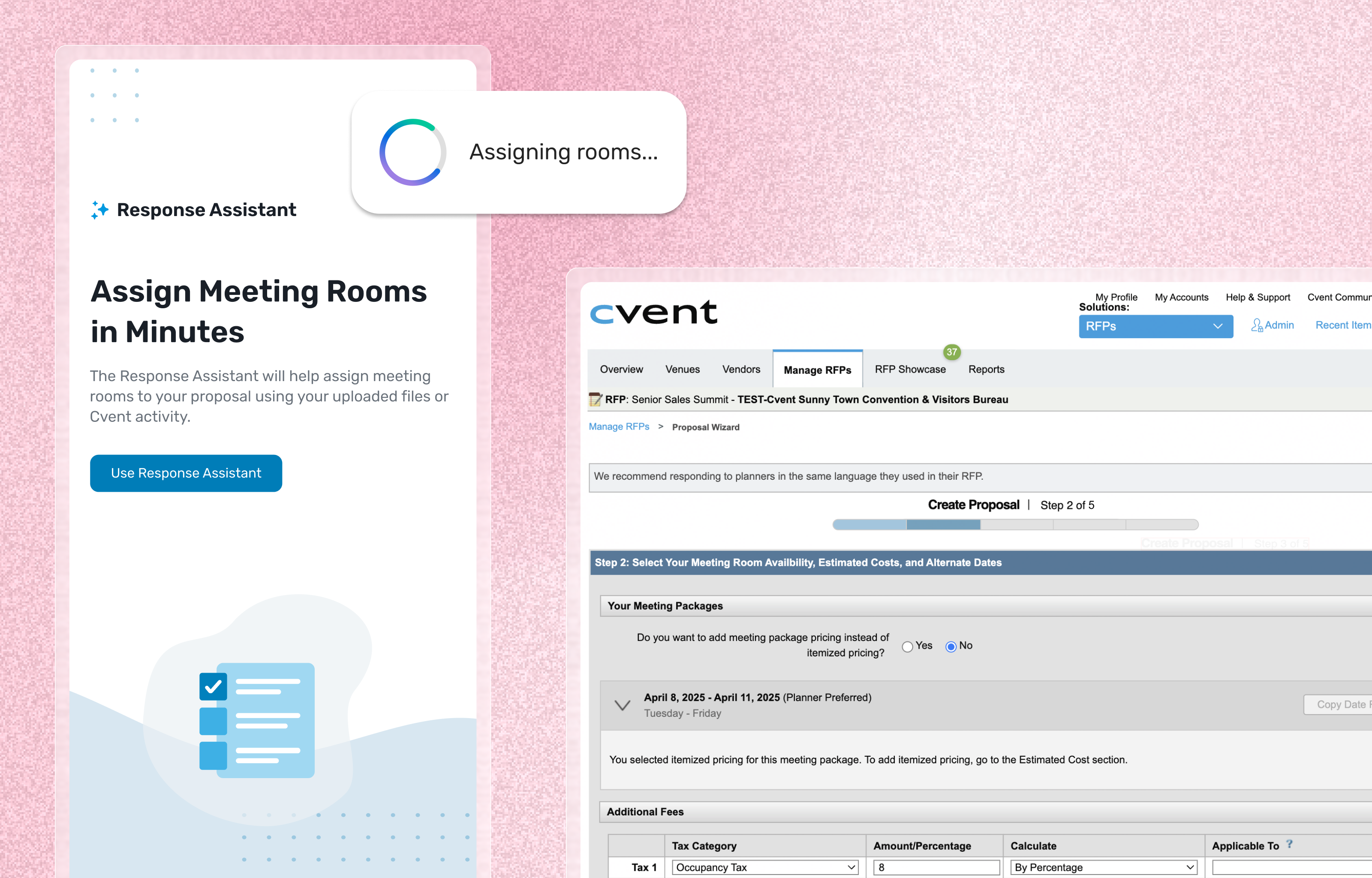
A panel-based AI assistant embedded alongside the proposal form. Two primary capabilities: auto-assign meeting rooms based on event context, and another section, custom questions!
Embedded into the current experience
Users never lose context of the proposal form while the assistant runs
The design intentionally kept the user in control while hiding the work in the background. The assistant surfaced suggestions and users could edit them. Additional flows were created for edge cases when the assistant wasn’t able to complete its task, or if the user got lost in the journey.
Outcomes
398/800
Target venue adoption in Q1 2026
Beta live
Launched on schedule! Feedback is fueling future iterations
Q4 Rollout
Targeting late GA in late 2026
We made it to the initial deadline but the project continues. File upload performs well, but automatic room assignment struggles with larger venues. It doesn't always add rooms that make sense given event flow. Without going into detail, the team is working on it.
Lessons learned
The refinement trap
High visibility check-ins pressured me to present early concepts as more polished. Rougher concepts save time and keeps conversation focused. Clarify the stage and fidelity of my work and reserve polish for the reviews that mattered most.
Understand the data first
AI’s quality depends on its training data. The auto-assign dataset was small, so errors should’ve been expected. I’d spend more time upfront understanding the model and what realistic output looked like.
Credits 🎬
This project took a village of people willing to clear schedules, respectfully disagree, and see the best in each other. I like to err on the side of privacy so I won’t provide names or initials, but the extended PM, Engineering and UX orgs all came together to make this happen. I couldn’t have asked for more support!
Other work
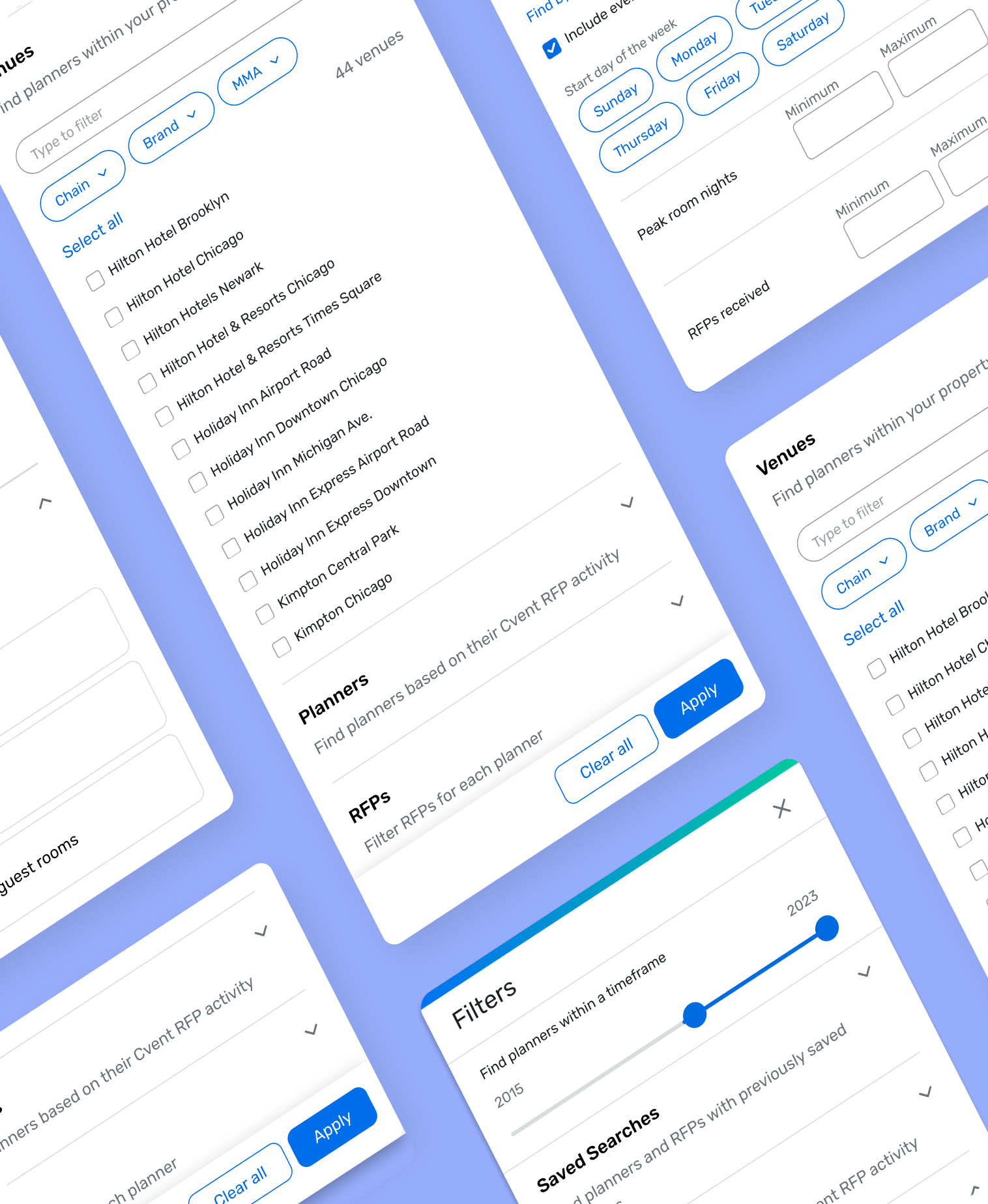
Filter design
Design systems
Hospitality
Helping venues find the right event opportunities faster
View →
NDA
Acquisition
Integrations
Building bridges between newly acquired teams and users
View →
AI Design
Beta testing
Product strategy
Helping venues find the right event opportunities faster
Redesigning a workflow so response times shrink from days to minutes.
Role
Design lead, Researcher
Team
Researcher, Content designer, Architect, VP of Product
Timeline
Mar - Apr 2022 (3 months)
Tasks
Pitching, Prototyping, Interaction design, Concept testing
Tools
Figma, Sigma, Microsoft Azure
For each event opportunity, 10 hotels race to complete a form that hasn’t been updated in 25 years fastest. In a 3 month sprint before our sales conference, I partnered with SMEs to secure board buy in. We launched an AI assistant that auto-assigns meeting rooms and drafts responses. Beta feedback is being used to iterate before GA.
398/800
Target venue adoption
Beta live
Launch on schedule
Q4 Rollout
Targeting GA in Q4 2026
Context
Hoteliers (salespeople that work at hotels) have been raising the alarm for years. It’s an open secret that event and hospitality often ranks as one of the most stressful employment sectors.
It’s not clickbait, working in the event industry is hard! Article from Forbes.
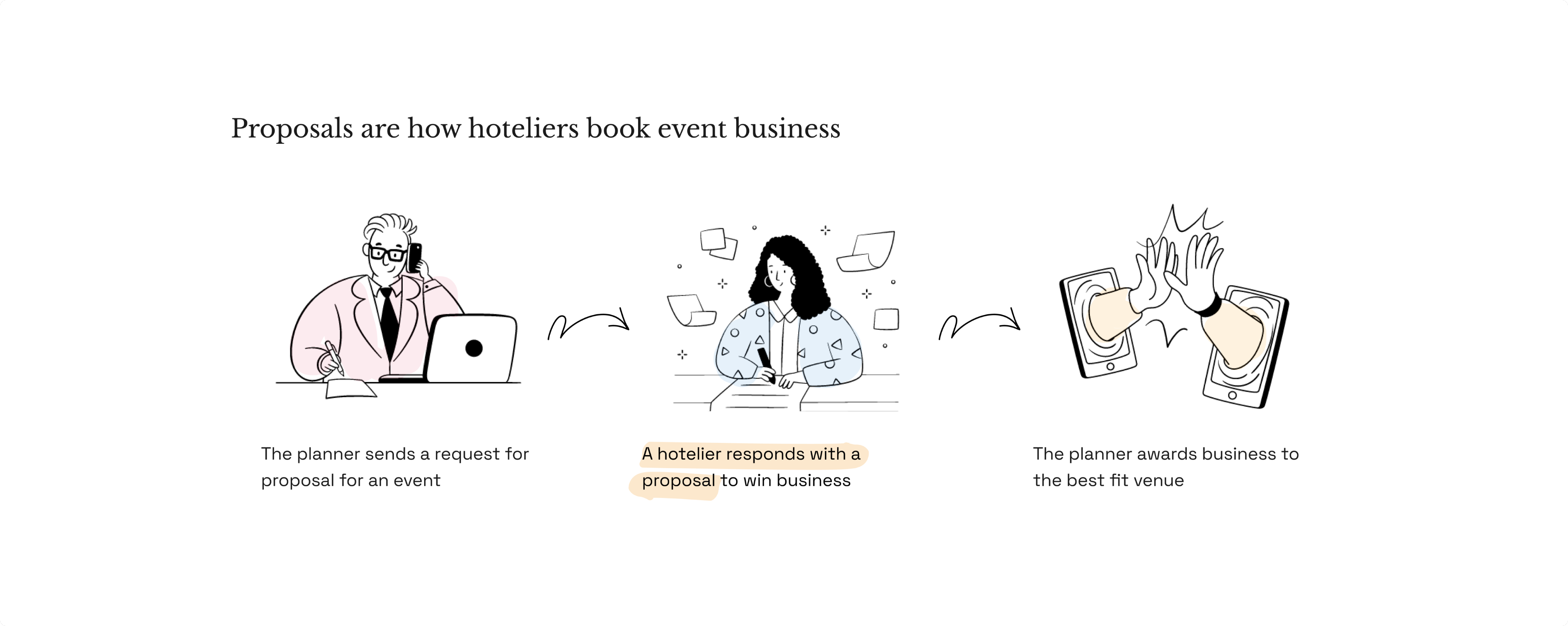
A high level summary of the sourcing workflow
The current experience
Imagine working on this for half a week, multiplied by the amount of leads you’re trying to win 😅
3.5 Days
Average completion time
10:1
Venues competing per event
25 years 😱
Since last workflow update
This project arrived at the start of the AI boom. Executive leadership wanted two high-value beta ready AI experiences to debut at our annual sales conference.
The stakes were real. Our proposals are the industry standard but they’re cumbersome and legacy. We were in a prime spot to be disrupted by a fast moving AI first startup, and in many ways still are.
“How might we have... improved this UI?”
Please note this project involved heavy constraints and legacy systems. For more exploratory projects, check out the Bridge project.
The Problem
How might we automate cumbersome manual processes so users with limited time can complete proposals faster?
*Without restructuring the current workflow
A full redesign was out of scope, so the solution needed to work with the legacy experience while scaling for the future.
Research
Before the project kicked off, I scheduled time with burgeoning AI SMEs, read articles and audited tools like Claude, ChatGPT, and Notion to identify emerging interaction patterns.
Takeaway 1
AI is the tool not the feature
It’s a technology that’s fallible, not a magic money printer. In fact, chat UX often pushes the cognitive load of precise description onto the user through prompt generation.
Takeaway 2
Task time management
Assigning rooms, answering questions, and providing pricing are the most time-intensive tasks.
Takeaway 3
Premature room assignment
Users resist assigning rooms because proposals are sent months before an event, and rooms are likely to change.
Takeaway 4
The no-feedback loop
Hoteliers spend days creating proposals, but planners only award 1 in every 10 offers. Some hoteliers reduce quality to save time.
For more reading on this I recommend When Words Cannot Describe by Maximillian Prias
With three potential sections to focus on (meeting rooms, adding pricing, answering questions), and the above research findings, I collabed with PMs to target automating room assignment would be the most attractive and feasible value add
Process
This was a tiger team effort. Engineers explored what was technically possible with LLMs while I ran parallel UX exploration. We learned what was possible from each other in real time. It blurred the lines of traditional iteration cycles.
01
Exploration
User flows, sketches and competitive audits. Daily syncs with leadership.
Collaborators: Architects, Engs, PMs, PDs
02
Iteration
Workshops and crits to pressure test designs. Constant negotiation between what was ideal, and what was possible.
Collaborators: Devs, PDs, CDs, UX management
03
Polish
Refinement, prototyping, executive check-ins, and board pitches. Pivoting direction as needed.
Collaborators: PMs, Sales, Exec leadership
04
Repeat it all next week (or sooner)
Agile environments demand fast loops and even faster feedback. We stay ready to pivot.
Collaborators: all of the above!
Key Decisions
Panel as main interaction model
1 / 3
AI native chat
Hi Amanda
Start your day by responding to 3 high priority RFPs.
prioritize by need dates

16K
profit
18-20K
revenue
10 mins
estimated response time
A classy jazzy birthday with high meeting space demand. The planner has worked with your brand but not your venue.

$288


16K
profit
18-20K
revenue
10 mins
estimated response time
A classy jazzy birthday with high meeting space demand. The planner has worked with your brand but not your venue.
$288
16K
profit
18-20K
revenue
10 mins
estimated response time
A classy jazzy birthday with high meeting space demand. The planner has worked with your brand but not your venue.
$288
Respond to RFPs
See all leads
✅ Pros
- Matches emerging chat interface patterns
- AI native experience circumvents legacy technology
- Canvas flexibility allows to leverage the design system
❌ Cons
- Disconnected from proposal experience, might be jarring
- Adding scope with the ability to review and pull data from multiple products
Single proposal workflow
Designing for multiple proposals simultaneously would have had a higher payoff, but required exploration well outside our timeline. With three months on the clock, I made the call to nail the basics and focus on a single proposal.
Upload and auto assign
Users could push information from a CRM, upload files, or have the system auto-assign and auto-draft. I focused on file upload and auto-assign as the lowest lift and easiest to comprehend.
Zoom in: designing for safety
The assistant filled out the form so fast, opening and closing modals could trigger seizures.
Final designs
A panel-based AI assistant embedded alongside the proposal form. Two primary capabilities: auto-assign meeting rooms based on event context, and another section, custom questions!
Embedded into the current experience
Users never lose context of the proposal form while the assistant runs
The design intentionally kept the user in control while hiding the work in the background. The assistant surfaced suggestions and users could edit them. Additional flows were created for edge cases when the assistant wasn’t able to complete its task, or if the user got lost in the journey.
Outcomes
398/800
Target venue adoption in Q1 2026
Beta live
Launched on schedule! Feedback is fueling future iterations
Q4 Rollout
Targeting late GA in late 2026
We made it to the initial deadline but the project continues. File upload performs well, but automatic room assignment struggles with larger venues. It doesn't always add rooms that make sense given event flow. Without going into detail, the team is working on it.
Lessons learned
The refinement trap
High visibility check-ins pressured me to present early concepts as more polished. Rougher concepts save time and keeps conversation focused. Clarify the stage and fidelity of my work and reserve polish for the reviews that mattered most.
Understand the data first
AI’s quality depends on its training data. The auto-assign dataset was small, so errors should’ve been expected. I’d spend more time upfront understanding the model and what realistic output looked like.
Credits 🎬
This project took a village of people willing to clear schedules, respectfully disagree, and see the best in each other. I like to err on the side of privacy so I won’t provide names or initials, but the extended PM, Engineering and UX orgs all came together to make this happen. I couldn’t have asked for more support!
Other work
Filter design
Design systems
Hospitality
Helping venues find the right event opportunities faster
View →

NDA
Acquisition
Integrations
Building bridges between newly acquired teams and users
View →
AI Design
Beta testing
Product strategy
Bringing Event Sourcing into the 21st Century
Redesigning a workflow so response times shrink from days to minutes.
Role
Design lead
Researcher
Team
Researcher
Content designer
Architect
VP of Product
Timeline
Mar - Apr 2025 (3 months)
Tasks
Pitching
Prototyping
Interaction design
Concept testing
Tools
Figma
Sigma
Microsoft Azure
For each event opportunity, 10 hotels race to complete a form that hasn’t been updated in 25 years fastest. In a 3 month sprint before our sales conference, I partnered with SMEs to secure board buy in. We launched an AI assistant that auto-assigns meeting rooms and drafts responses. Beta feedback is being used to iterate before GA.
398/800
Target venue adoption
Beta live
Launch on schedule
Q4 Rollout
Targeting GA in Q4 2026
Context
Hoteliers (salespeople that work at hotels) have been raising the alarm for years. It’s an open secret that event and hospitality often ranks as one of the most stressful employment sectors.
It’s not clickbait, working in the event industry is hard! Article from Forbes.
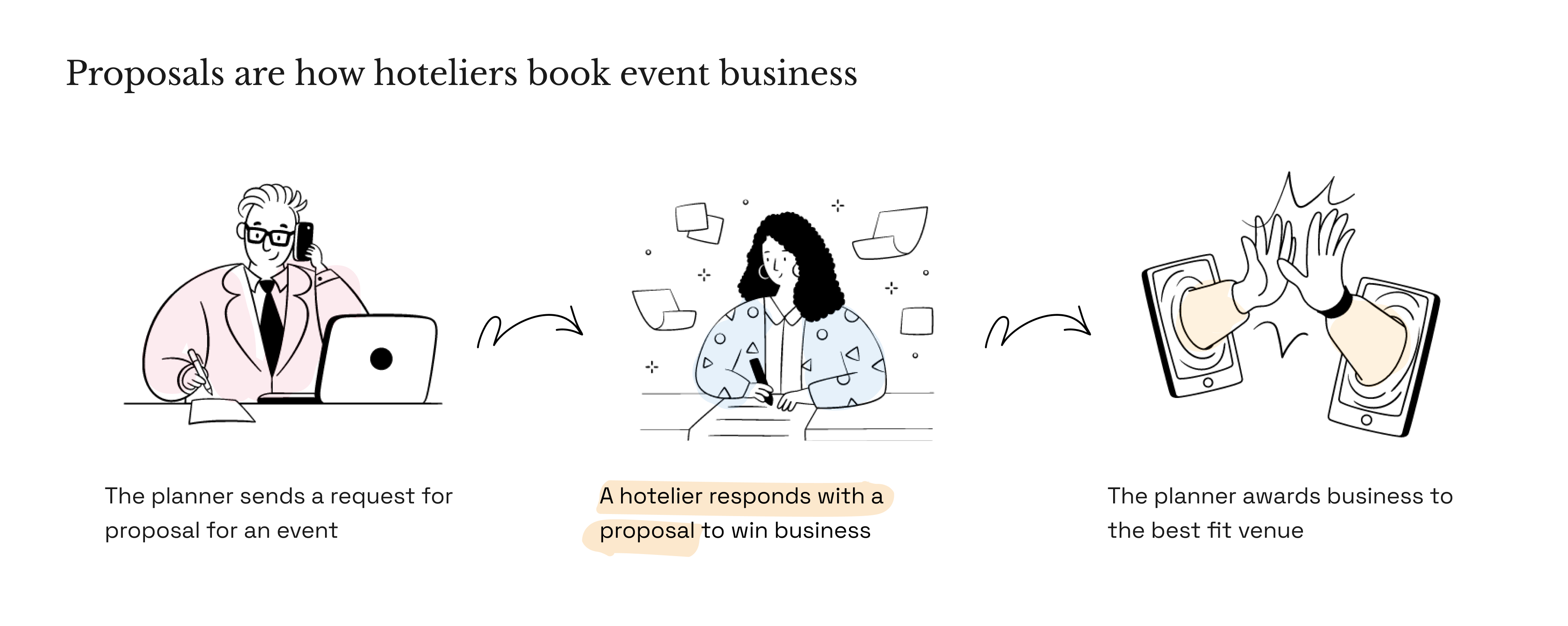
A high level summary of the sourcing workflow
The current experience
Imagine working on this for half a week, multiplied by the amount of leads you’re trying to win 😅
3.5 Days
Average completion time
10:1
Venues competing per event
25 years 😱
Since last workflow update
This project arrived at the start of the AI boom. Executive leadership wanted two high-value beta ready AI experiences to debut at our annual sales conference.
The stakes were real. Our proposals are the industry standard but they’re cumbersome and legacy. We were in a prime spot to be disrupted by a fast moving AI first startup, and in many ways still are.
“How might we have... improved this UI?”
Please note this project involved heavy constraints and legacy systems. For more exploratory projects, check out the Bridge project.
The Problem
How might we automate cumbersome manual processes so users with limited time can complete proposals faster?
*Without restructuring the current workflow
A full redesign was out of scope, so the solution needed to work with the legacy experience while scaling for the future.
Research
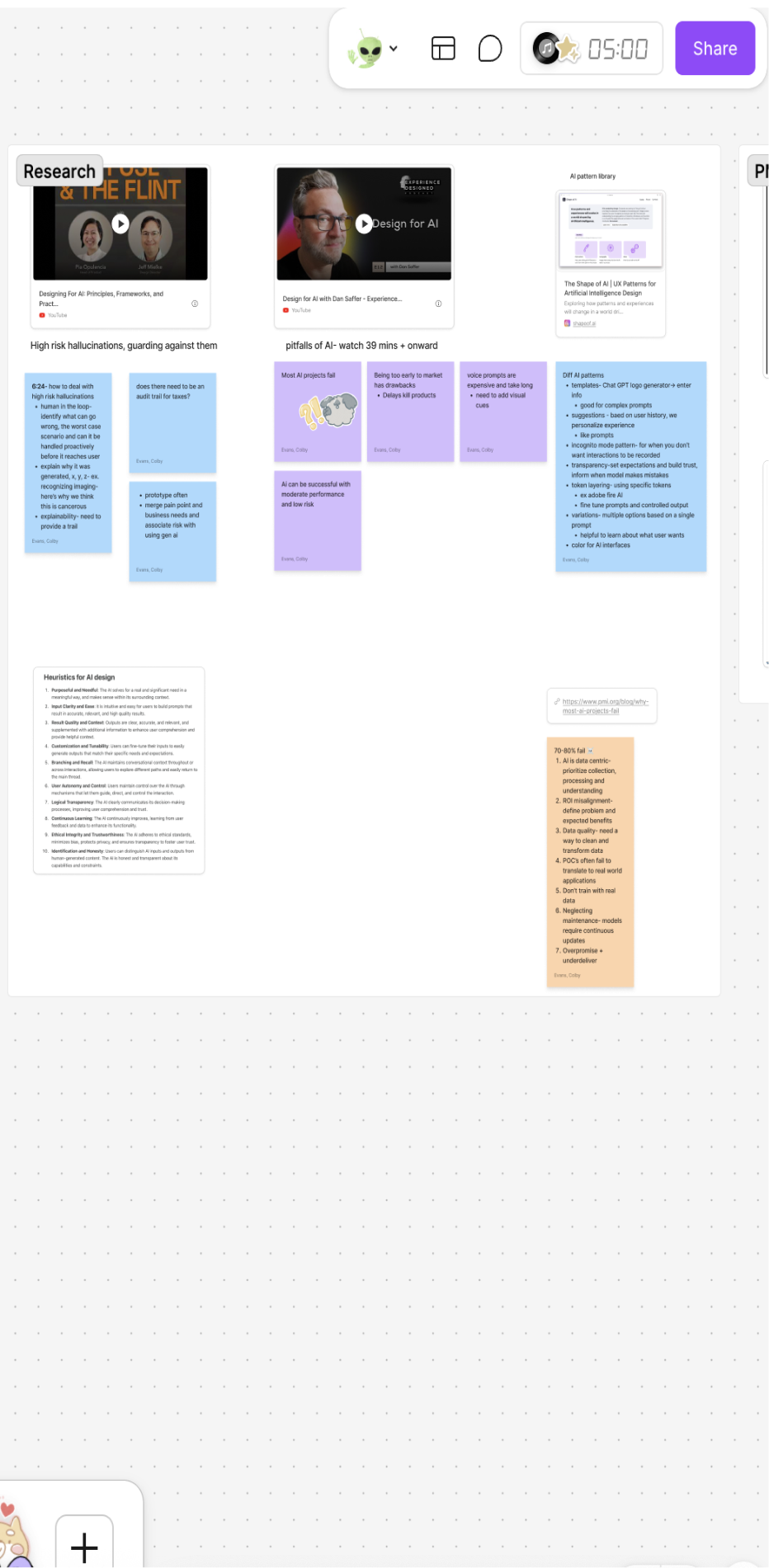
Before the project kicked off, I scheduled time with burgeoning AI SMEs, read articles and audited tools like Claude, ChatGPT, and Notion to identify emerging interaction patterns.
Takeaway 1
AI is the tool not the feature
It’s a technology that’s fallible, not a magic money printer. In fact, chat UX often pushes the cognitive load of precise description onto the user through prompt generation.
Takeaway 2
Task time management
Assigning rooms, answering questions, and providing pricing are the most time-intensive tasks.
Takeaway 3
Premature room assignment
Users resist assigning rooms because proposals are sent months before an event, and rooms are likely to change.
Takeaway 4
The no-feedback loop
Hoteliers spend days creating proposals, but planners only award 1 in every 10 offers. Some hoteliers reduce the quality of responses to save time.
For more reading on this I recommend When Words Cannot Describe by Maximillian Prias
With three potential sections to focus on (meeting rooms, adding pricing, answering questions), and the above research findings, I collabed with PMs to target automating room assignment would be the most attractive and feasible value add
Process
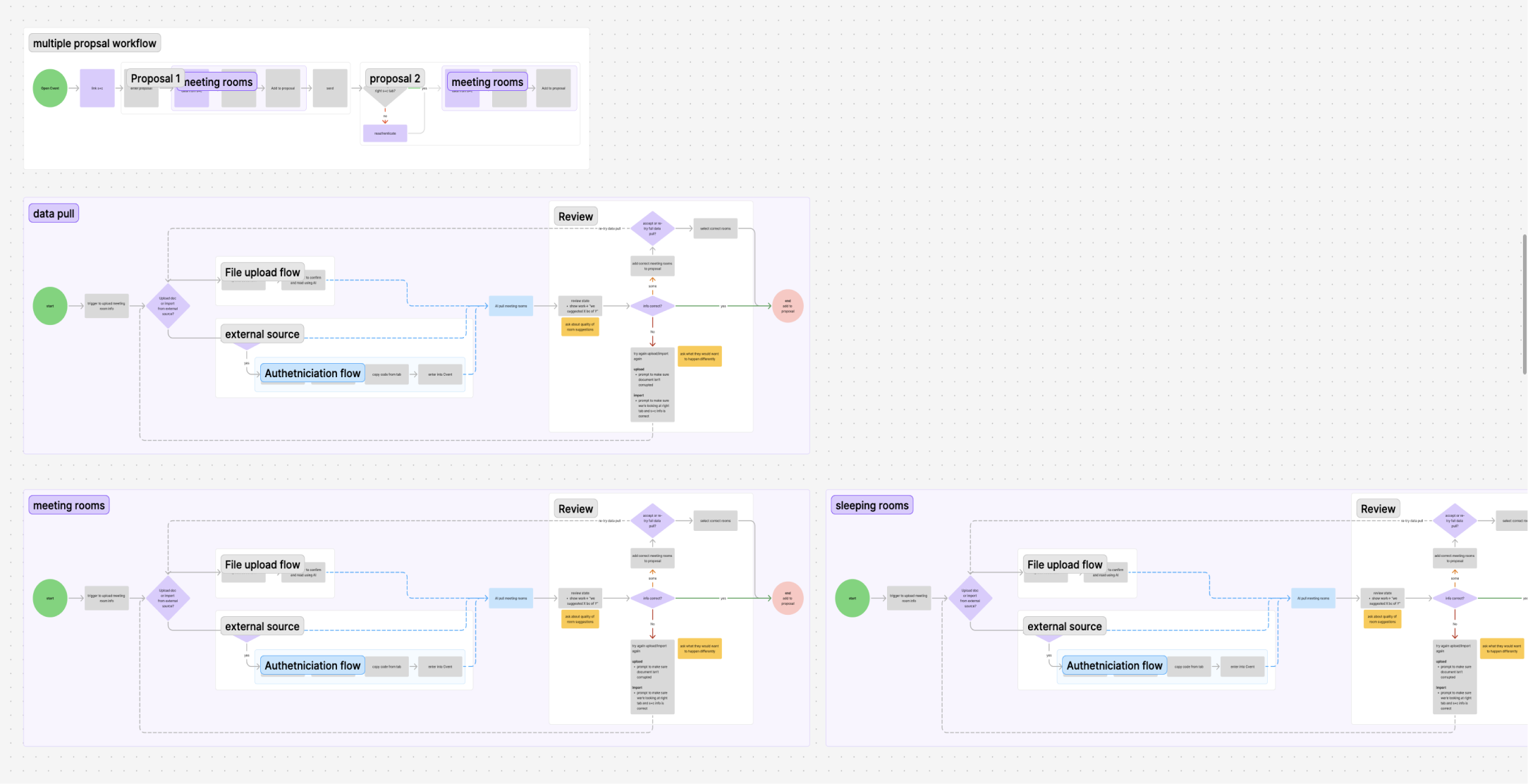
This was a tiger team effort. Engineers explored what was technically possible with LLMs while I ran parallel UX exploration. We learned what was possible from each other in real time. It blurred the lines of traditional iteration cycles.
01
Exploration
User flows, sketches and competitive audits. Daily syncs with leadership.
Collaborators: Architects, Engs, PMs, PDs
02
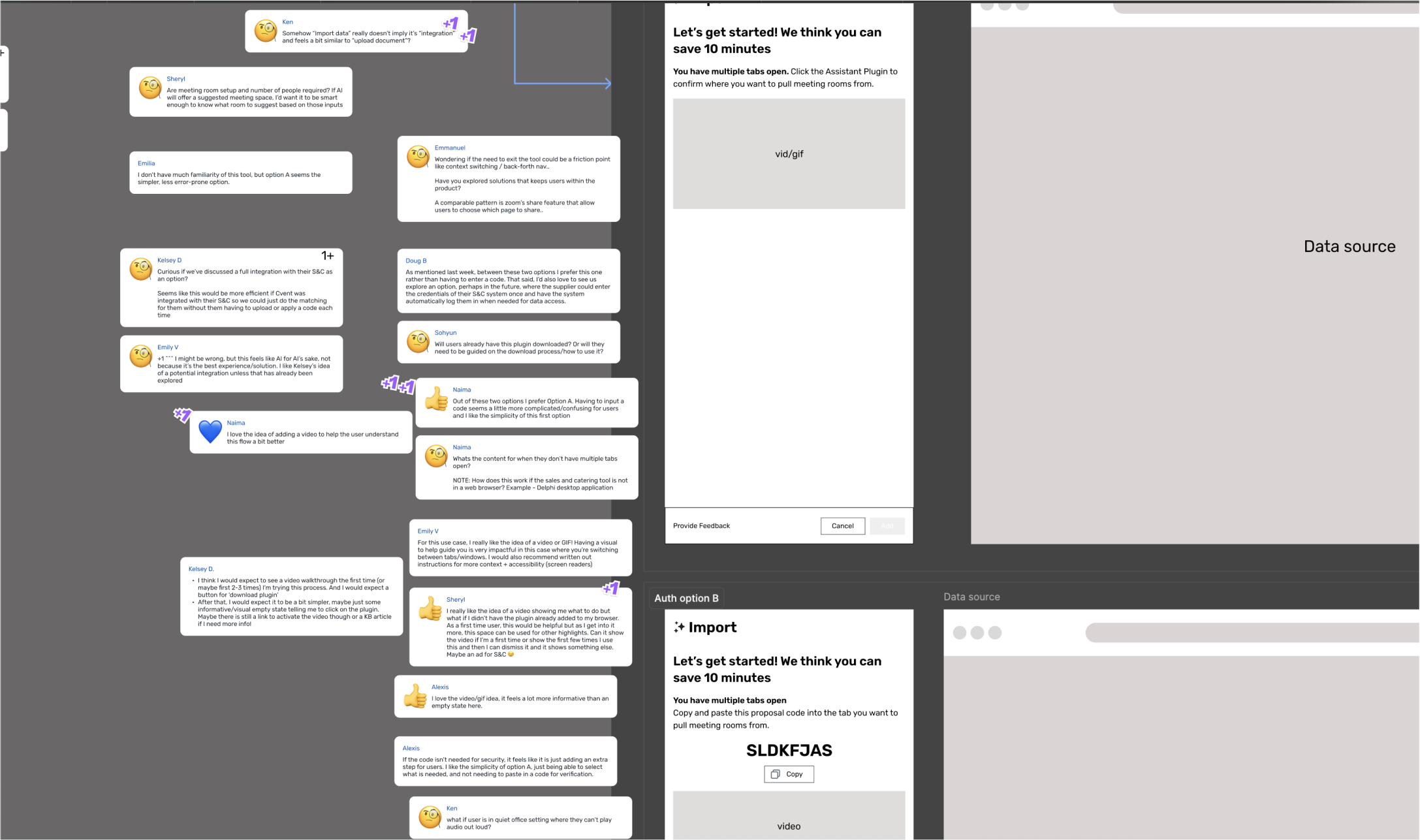
Iteration
Workshops and crits to pressure test designs. Constant negotiation between what was ideal, and what was possible.
Collaborators: Devs, PDs, CDs, UX management
03
Polish
Refinement, prototyping, executive check-ins, and board pitches. Pivoting direction as needed.
Collaborators: PMs, Sales, Exec leadership
04
Repeat it all next week (or sooner)
Collaborators: all of the above!
Key Decisions
Panel as main interaction model
1 / 3
AI native chat
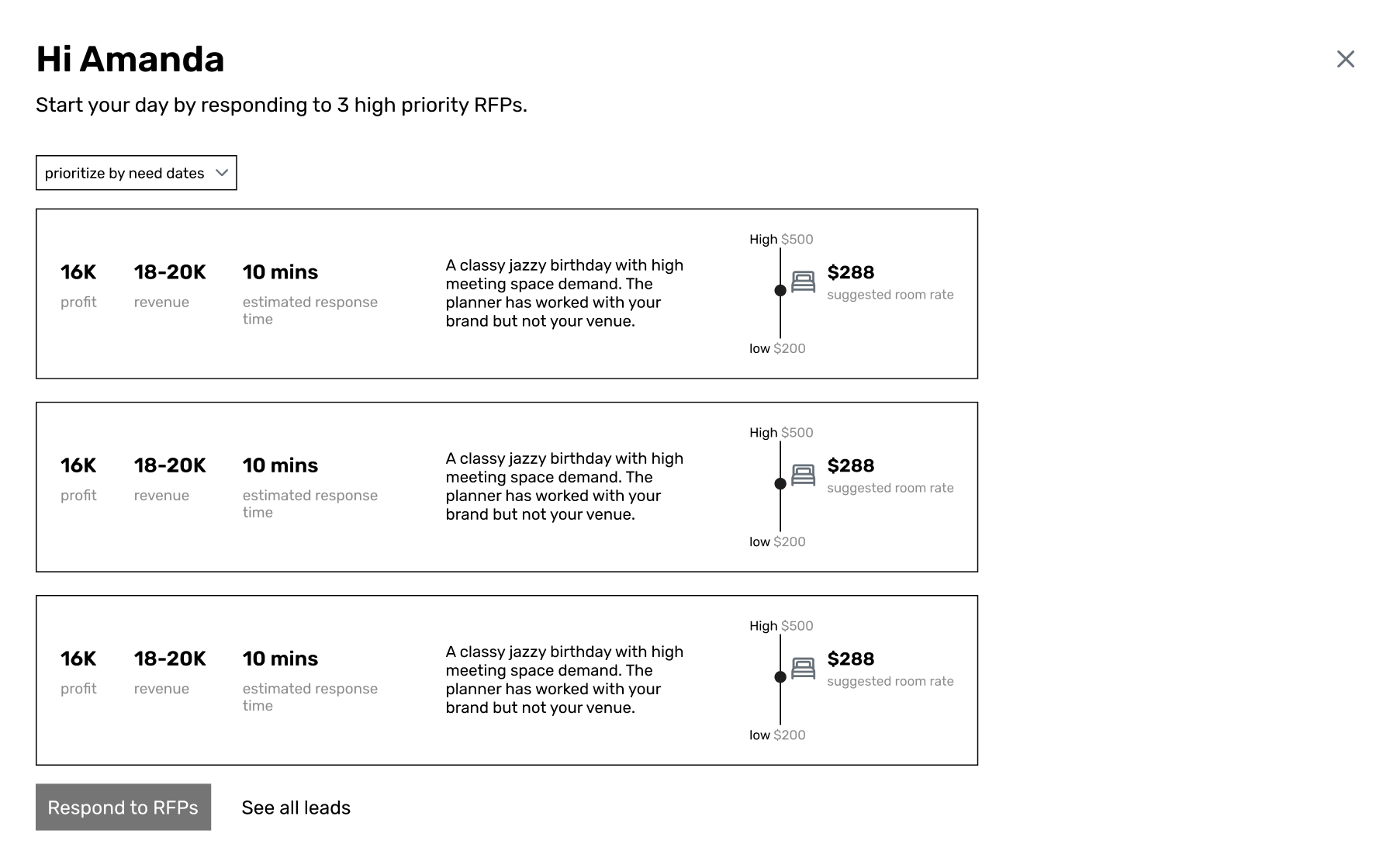
✅ Pros
- Matches emerging chat interface patterns
- AI native experience circumvents legacy technology- we can iframe in the end result
- Canvas flexibility allows to leverage the design system and patterns from other related apps
❌ Cons
- Disconnected from proposal experience, with all completely new UI which might be jarring
- Adding scope with the ability to review which proposals to respond to and pull data from multiple products
Single proposal workflow
Designing for multiple proposals simultaneously would have had a higher payoff, but required exploration well outside our timeline. With three months on the clock, I made the call to nail the basics and focus on a single proposal.
Upload and auto assign as automation pathways
Users could push information from a CRM, upload files, or have the system auto-assign and auto-draft. I focused on file upload and auto-assign as the lowest lift and easiest to comprehend. The other option were deferred.
Zoom in: designing for safety
The assistant filled out the form so fast, opening and closing modals could trigger seizures.
Final designs
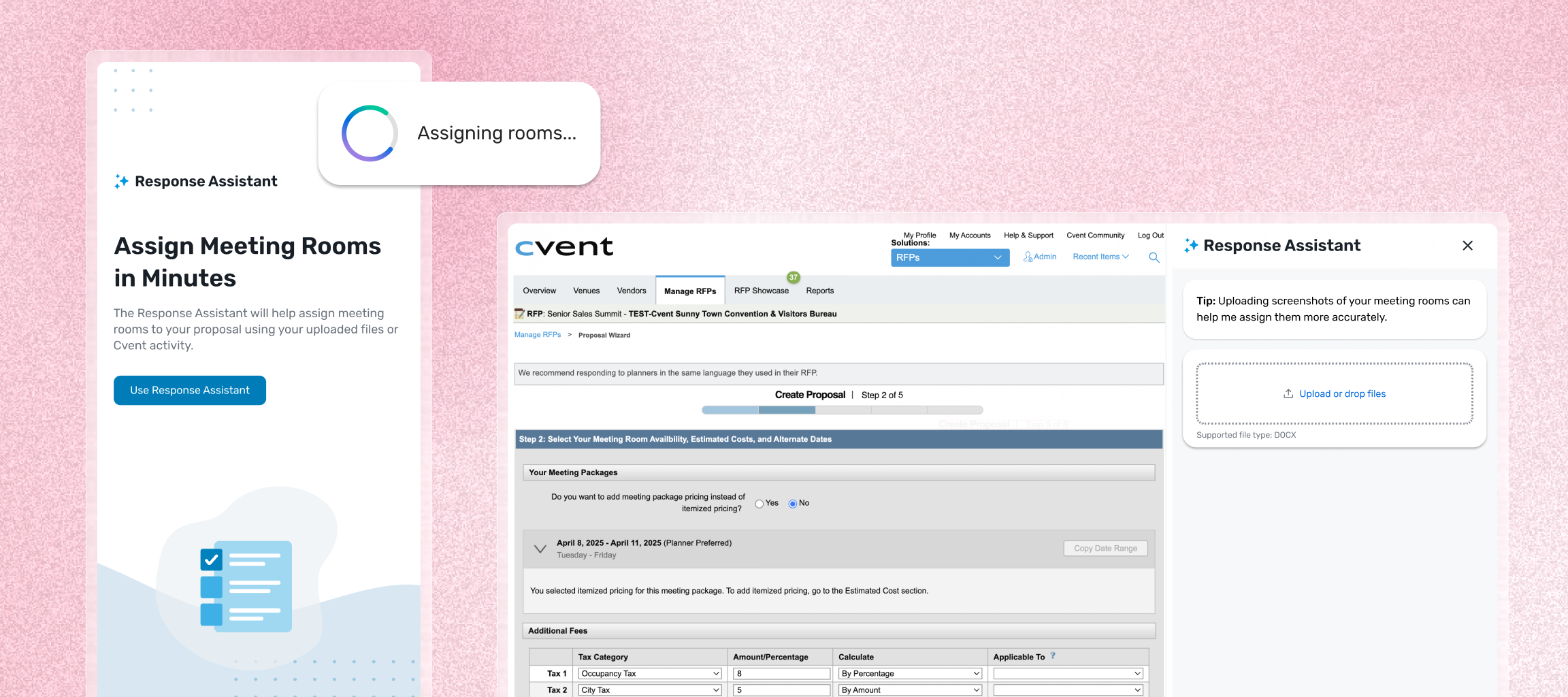
A panel-based AI assistant embedded alongside the proposal form. Two primary capabilities: auto-assign meeting rooms based on event context, and another section, custom questions!
Embedded into the current experience
Users never lose context of the proposal form while the assistant runs
The design intentionally kept the user in control while hiding the work in the background. The assistant surfaced suggestions and users could edit them. Additional flows were created for edge cases when the assistant wasn’t able to complete its task, or if the user got lost in the journey.
Outcomes
398/800
Target venue adoption in Q1 2026
Beta live
Launched on schedule! Feedback is fueling future iterations
Q4 Rollout
Targeting late GA in late 2026
We made it to the initial deadline but the project continues. File upload performs well, but automatic room assignment struggles with larger venues. It doesn't always add rooms that make sense given event flow. Without going into detail, the team is working on it.
Lessons learned
The refinement trap
High visibility check-ins pressured me to present early concepts as more polished. Rougher concepts save time and keeps conversation focused. Clarify the stage and fidelity of my work and reserve polish for the reviews that mattered most.
Understand the data first
AI’s quality depends on its training data. The auto-assign dataset was small, so errors should’ve been expected. I’d spend more time upfront understanding the model and what realistic output looked like.
Credits 🎬
This project took a village of people willing to clear schedules, respectfully disagree, and see the best in each other. I like to err on the side of privacy so I won’t provide names or initials, but the extended PM, Engineering and UX orgs all came together to make this happen. I couldn’t have asked for more support!
Other work
Filter design
Design systems
Hospitality
Helping venues find the right event opportunities faster
View →
B2C
Acquisition
Integrations
Building bridges between newly acquired teams and users
View →